
In conversation with Greg Whately, Principal Consultant

Millions of fans tuned in to watch the FIFA World Cup 2026. They witnessed spectacular goals, unforgettable moments and electric atmospheres inside some of North America’s most iconic stadiums.
But while the spotlight remained firmly on the players, another team was working tirelessly behind the scenes. Every tackle, pass and celebration relied on one thing performing flawlessly: the pitch.
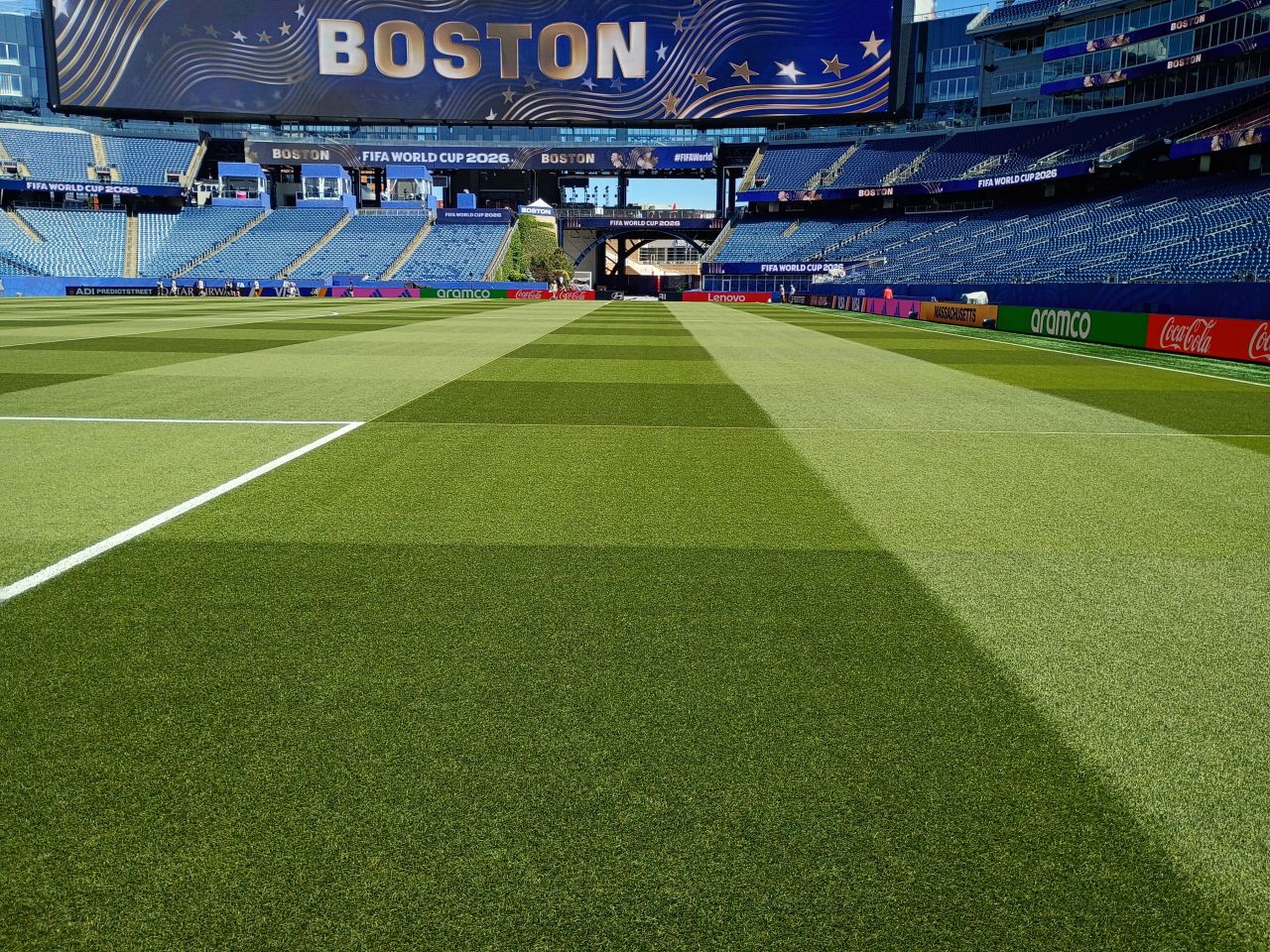
For Greg Whately, Principal Consultant at STRI, the tournament offered the opportunity to play a pivotal role as FIFA Pitch Venue Manager at Boston Stadium. We caught up with Greg to find out what it really takes to deliver a world-class playing surface on football’s biggest stage.

At the heart of tournament operations
For many, the role of a Pitch Venue Manager (PVM) begins and ends with maintaining the stadium pitch. The reality couldn’t be more different.
Throughout the tournament, Greg served as the link between multiple FIFA departments, known as functional areas, stadium operations and participating Football Associations, balancing the priorities of competition management, ceremonies, broadcasting, marketing, venue operations and much more, all while protecting the integrity of the playing surface.
Every day began with early operational meetings which included discussions around the different activities planned to take place on the pitch. This didn’t just include pitch maintenance activities but also broadcasting and media access, ceremony rehearsals, and more, before moving into pitch inspections, FIFA Quality NPS testing, training ground visits and preparations for matchday.
“It’s about making sure everything aligns.” Greg explains. “Every functional area has different priorities, but ultimately everyone is working towards delivering a successful match day and ultimately a successful event.”
Every decision backed by science
While supporters see a pristine football pitch, every management and maintenance decision throughout the tournament was underpinned by data.
Throughout the tournament, pitch performance was continually monitored using data, from moisture content and surface hardness to rotational resistance and grass coverage. But collecting data is only the starting point. The real value comes from understanding what it is telling you, putting it into context and knowing when action is needed.
Greg’s experience across international tournaments gave him the knowledge to interpret the data alongside the conditions on the ground, identify potential issues and support the pitch teams in making informed decisions. It also meant he could draw on lessons from previous tournaments and share that experience with the teams responsible for maintaining both the stadium and training venue pitches.
As Greg explains, the relationship between the Pitch Venue Manager and the pitch crews is fundamental to success:
“The relationship between pitch or field crews and PVM are critical to the success of any pitch. I was lucky that the people on those crews that I had the privilege to work with during the World Cup were excellent.”

The pitches fans never see
Although the stadium pitch attracts worldwide attention, Greg believes the real unsung heroes are the training venues. Every competing nation expects facilities that closely mirror match conditions, meaning the same level of care and precision must be maintained across multiple sites throughout the competition.
“People only ever see the stadium, but there’s a huge amount of work happening behind the scenes at the training venues. They’re just as important to the teams when preparing for each match.”
No two venues are the same
One of the greatest challenges of hosting a World Cup across North America is its sheer geographical scale.
From climate and rainfall to grass species, stadium architecture and local growing conditions, every venue presented a unique set of variables that influence how a pitch performs.
Even something as simple as whether a stadium has a roof can transform the growing environment by affecting sunlight, airflow, humidity and surface temperatures. Although every pitch measures the same 105 x 68 metres, no two behave in exactly the same way.
“In Boston we benefited from having an open stadium. We weren’t dealing with the same microclimate challenges some of the dome venues faced, but every stadium presented its own set of variables.”
With rapidly changing weather forecasts and periods of heavy rainfall, and higher than normal temperatures, adaptability became just as important as technical expertise.

Performing under pressure
At an event of this scale, unexpected challenges are inevitable. Greg recalls one moment when a sprinkler malfunctioned during a match, demanding an immediate response.
“It’s about staying level-headed. You don’t have time to panic. You assess the situation, trust your experience and solve the problem.”
It’s an approach built on years of experience delivering elite tournaments around the world with STRI.
“The experience you gain working on different projects and alongside different people prepares you for these moments. Every grounds team has its own way of working, and if you’re not willing to learn from others, it’s going to be a tough tournament.”
Long days with one shared goal
Working at a FIFA World Cup is both demanding and immensely rewarding. Long hours, early starts and constant decision-making leave little opportunity to switch off, but the objective never changes.
“You have to mentally prepare yourself. You’re there with one objective: delivering the best possible playing surface for the world’s best players.”
Lessons from football’s biggest stage
For Greg, every international tournament brings fresh challenges and new opportunities to learn.
While technology, logistics and venue operations continue to evolve, one thing remains constant.
People.
“Everyone brings different experience and a fresh approach. When everyone works together towards the same goal, that’s what makes a tournament successful. I’m really proud to have been part of a team that wasn’t just supporting the tournament but also delivering a lasting benefit to the city of Boston and wider state of Massachusetts. And, of course, the pitch performed impeccably.”
Delivering excellence on the world’s biggest stage
Greg’s experience in Boston formed part of STRI Group’s wider contribution to FIFA World Cup 2026™ through the Elite Pitch Alliance (EPA), the specialist consortium responsible for designing, constructing and managing tournament-ready pitches across North America. As part of the Alliance, STRI Group led the design of the overlay solution for several flagship venues, including New York New Jersey Stadium, Seattle Stadium and BC Place Vancouver Stadium.
From innovative engineering and agronomic expertise to on-the-ground tournament delivery, STRI continues to help create the world-class playing surfaces that allow the beautiful game to be played at its very best.