
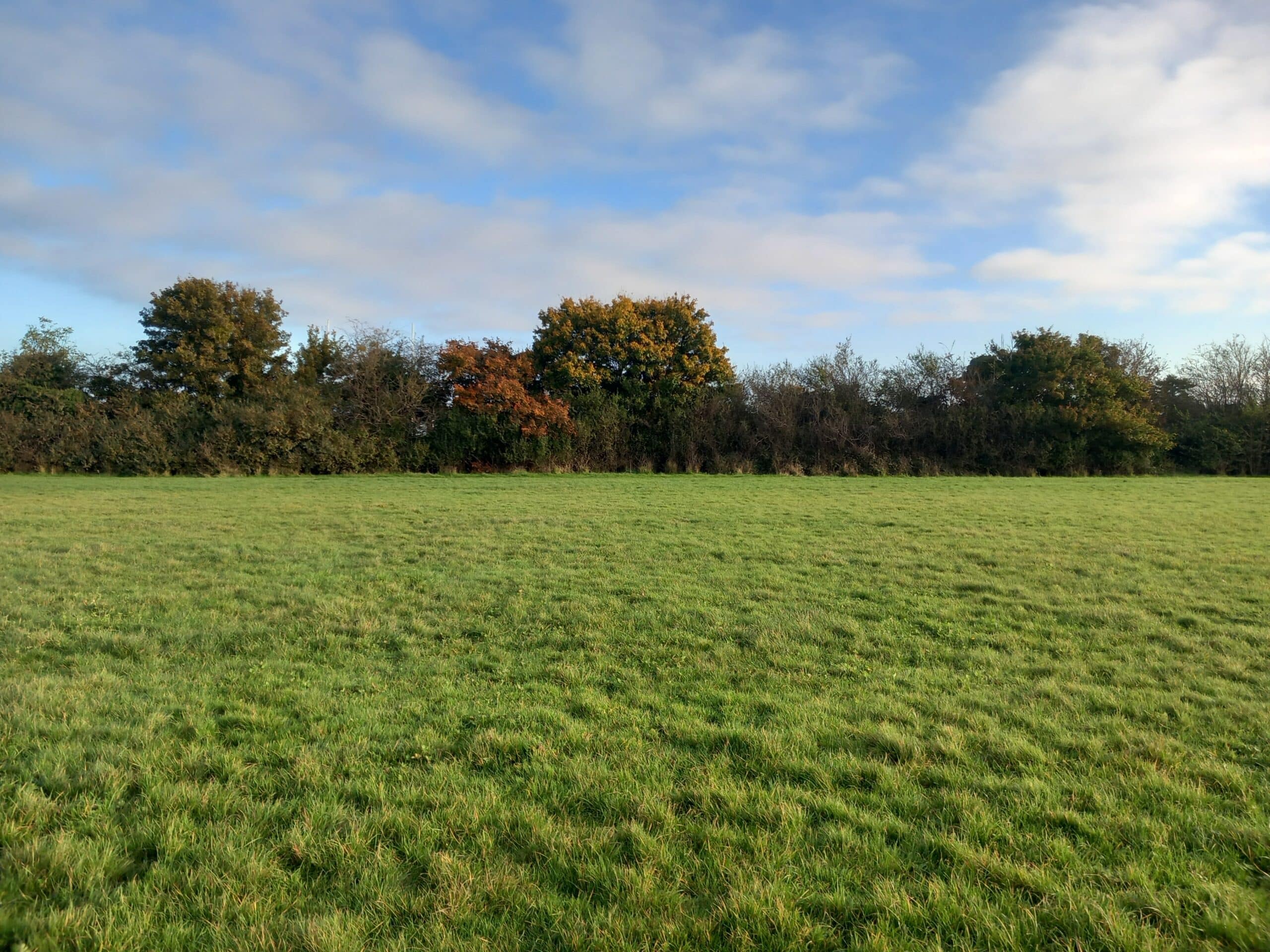
Blackbridge Sports Field
scroll
Services
Project summary
- Technical consultancy
- Site investigation
- Drainage review
- Agronomic assessment
Project summary
Sports hubs have an important role to play in bringing communities together, providing facilities that support participation and creating opportunities for people of all ages and abilities to be more active.
But creating a successful multi-sport facility involves more than providing the space. The playing surfaces need to be designed to accommodate different sports, withstand increased levels of use and deliver reliable performance over time.
At Blackbridge Sports Field in Gloucester, plans to develop a new community sports hub presented an opportunity to transform the existing facilities. STRI was appointed by FWP architects to assess the site and provide specialist advice on the condition of the existing playing field, the constraints affecting its development and the improvements needed to support its proposed future use.
The proposed development includes a new sports hub building and 3G artificial pitch, alongside the development of the existing natural grass playing field to accommodate two natural grass football pitches and a natural grass cricket wicket and outfield.
the
challenge
The challenge
STRI’s assessment combined desk-based research with an on-site appraisal to build a clear picture of the site’s existing condition and its suitability for future sports use.
The review considered factors including topography, ground conditions, soil profile, drainage, vegetation, flood risk, geology and the site’s existing use. A series of trial pits were excavated to assess the underlying soil profile, supported by laboratory analysis of representative topsoil samples.
The assessment identified several factors that would need to be addressed as part of any future pitch development.
The existing playing field was in poor condition at the time of the assessment, with soft ground conditions and waterlogging particularly evident. Broadleaf weeds were prevalent, while key agronomic practices such as aeration, scarification, sand topdressing, fertilising and regular mowing did not appear to be taking place.
The site’s soil profile was another significant consideration. Testing classified the existing topsoil as clay, with 51% clay content, 29% silt and 20% sand. The heavy clay profile, combined with the absence of a primary drainage system, indicated limited drainage potential and would restrict the performance of the playing surface under increased levels of use.
The assessment also identified the site’s existing gradients as a consideration for the proposed development. The playing field had an average gradient of approximately 1:40, with some areas around 1:30. While this could potentially accommodate pitches depending on their orientation, the proposed pitch platform would need to be designed to meet the relevant Sport England and ECB gradient guidelines.
Drainage was identified as a key issue. No existing drainage system or obvious drainage outfall was identified across the playing field. With the proposed development expected to increase usage, STRI recommended that both primary and secondary drainage systems be incorporated into the new pitch platform.
The assessment also considered how material generated by the wider sports hub development could potentially be reused. A significant quantity of topsoil had been created and stockpiled in a bund adjacent to the playing field, with the intention of reusing this material to form the proposed natural turf pitch platform. STRI assessed the implications of this approach and provided recommendations around stripping, handling, grading and respreading the material.
the
solution
The solutions
Based on the findings, STRI developed recommendations for the next stage of the project, covering pitch platform construction, drainage, soil management, cricket wicket construction, seeding and initial maintenance.
The proposed pitch platform would require appropriate grading and level adjustments, alongside primary pipe drainage and secondary drainage using sand bands or slit drains. The recommendations also included cultivation, seedbed preparation and establishment of a hard-wearing natural turf surface.
For the proposed cricket wicket, STRI recommended the use of suitable imported cricket loam rather than the existing clay topsoil, which was considered to have excessive clay content for the intended use.
Importantly, the assessment did not stop at the construction requirements. STRI also set out an initial 12-month maintenance programme covering mowing, fertiliser application, overseeding, aeration, sand topdressing and weed control, recognising the importance of establishment and ongoing maintenance in achieving the required playing surface performance.
the
results
The result
The redevelopment was completed within the 84-day programme, delivering a completely reconstructed stadium pitch ready for Blackburn Rovers’ 2026-27 season.
Throughout the project, the club benefited from a single point of contact, while also having access to a wide range of specialist expertise across the project team. Additional specialist grounds support was provided during the intensive grow-in period, helping to ensure the playing surface was fully prepared for the start of the new season.
The project represented a substantial investment by Blackburn Rovers in Ewood Park and forms part of the club’s wider commitment to improving its facilities and providing the best possible playing environment for the first team.
The project demonstrates how design and construction can work together as one process, rather than being treated as separate stages.
This integrated approach delivered a number of benefits for the club, including clear communication, accountability and continuity of technical expertise throughout the project.
For Ewood Park, this meant moving from investigation and design to a completed stadium pitch within a demanding 84-day window, with technical expertise remaining closely involved throughout the construction process.
From the initial technical investigations and detailed design through to construction, grow-in and final delivery, the project was completed within the demanding close-season programme, while maintaining the required technical and performance standards.
The completed redevelopment provides Ewood Park with a high-quality playing surface supported by substantially improved drainage, irrigation and pitch infrastructure, creating a strong platform for consistent performance over the seasons ahead.
let’s start our conversation today
If you’ve got a question, or would like us to help you with a project, we’d love to hear from you. Complete the form, give us a call or come and see us.